Every year in the United States, more than three million people die.[1] Of those, somewhere between 600,000 and over one million are referred to medical examiner and coroner offices for investigation.[2] The system responsible for that work is smaller than most people realize—and the data shows it has been stretched beyond capacity for years.
The numbers behind the system
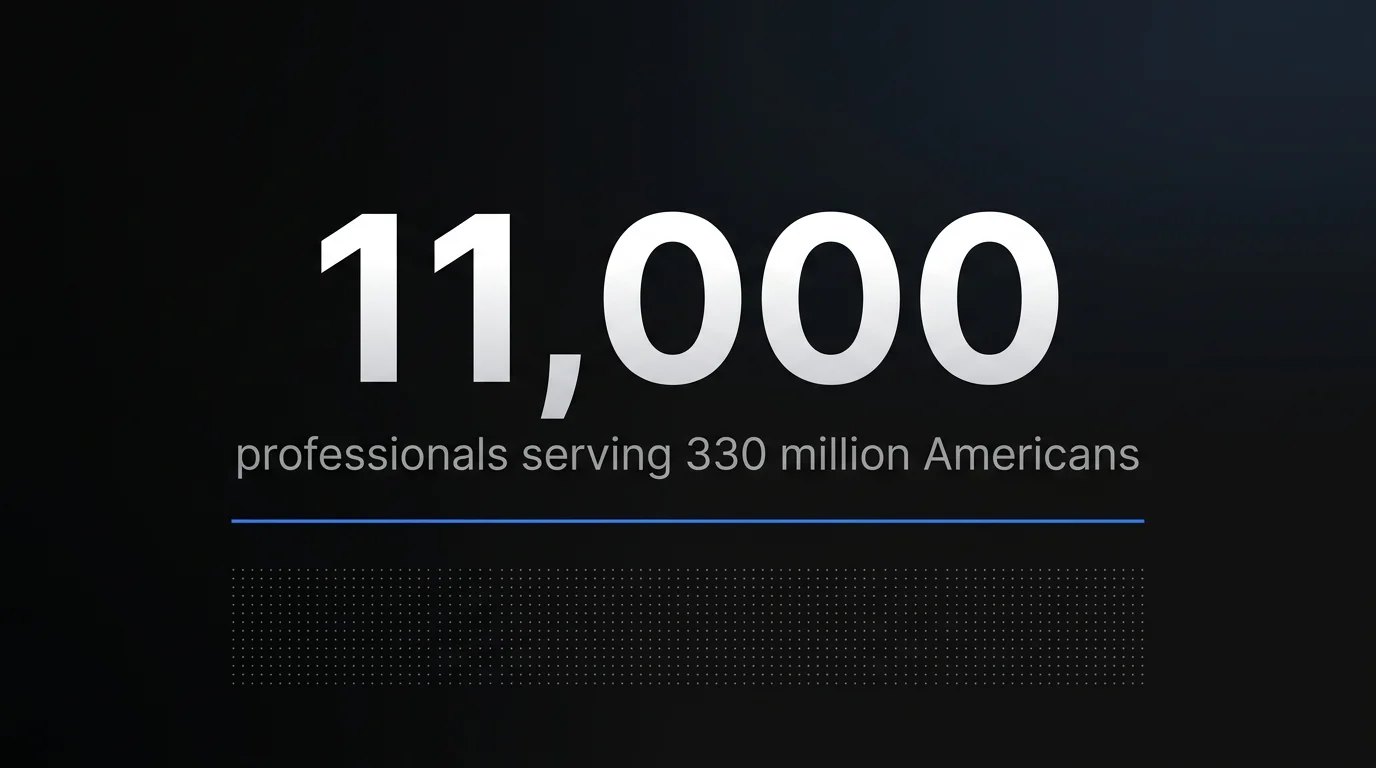
According to the Bureau of Justice Statistics, those 2,040 offices employ nearly 11,000 full-time equivalent staff.[2] That ratio—roughly one professional for every 30,000 Americans—reflects a system operating with minimal margin.
The CDC recorded approximately 3.09 million deaths in 2023 and 3.07 million in 2024.[1] Medical examiner and coroner offices investigate roughly 20 percent of all deaths—those that are sudden, unexplained, violent, or otherwise fall under medicolegal jurisdiction. In 2018 alone, more than 1.3 million deaths were referred to these offices, with 605,000 accepted for further investigation.[2]
Who these professionals are
Medicolegal death investigation is carried out by coroners, medical examiners, forensic pathologists, death investigators, autopsy technicians, and deputies. Their work determines cause and manner of death—findings that inform criminal prosecutions, public health surveillance, insurance determinations, and family closure.
These professionals operate at the intersection of the justice system, public safety, and public health.[3] Unlike most of the systems they serve, there is no national standard for how their offices are staffed, funded, or trained. Each state independently determines which deaths are investigated and sets its own professional requirements.
The gap between need and capacity
The shortage is most acute among forensic pathologists. The United States has approximately 500 practicing board-certified forensic pathologists.[4] The estimated need is at least 800 to 1,000 to maintain acceptable caseloads.[5]
The workforce is aging. The average forensic pathologist is 55, meaning a significant portion will retire within the next decade. Recruitment is not keeping pace—medical examiners earn an average of $185,000 annually, compared to $355,000 for hospital pathologists.[4] That gap makes it difficult to attract physicians to the field, particularly those carrying substantial student loan debt.
Among the broader pool of medicolegal death investigators, only about 1,500 are currently certified by the American Board of Medicolegal Death Investigators—a fraction of the total workforce.[6]
What happens when the system is strained
The consequences are concrete. Autopsies are backlogged in the hundreds across multiple states. Some jurisdictions must transport bodies to other counties or states because local offices lack capacity. In some cases, autopsies are performed by practitioners without specialized forensic pathology training.[7]
Documentation backlogs compound the problem. When reports take weeks or months to complete, investigations stall, prosecutions are delayed, and families wait for answers that should have come sooner. The system doesn't fail loudly. It erodes quietly—one delayed report, one overworked examiner, one under-resourced office at a time.
The medicolegal death investigation system is one of the last parts of public infrastructure most people will ever interact with—and one of the least understood.
What this means for the field
The workforce problem will not be solved by any single intervention. It requires sustained investment in training pipelines, competitive compensation, and the development of national standards for staffing and accreditation.[3]
But the professionals already working in these offices—the 11,000 carrying this responsibility today—deserve tools that reduce friction rather than add to it. Documentation consumes a disproportionate share of their time. If that burden can be reduced, it frees capacity for the work that requires human judgment: reading a scene, performing an examination, forming an opinion, testifying in court.
That is the premise Locarda was built on. Not replacing professionals, but ensuring their time is spent where it matters most.
- CDC — Deaths and Mortality
- BJS — Medical Examiner and Coroner Offices, 2018
- National Academies — Strengthening the U.S. MLDI System, 2024
- Becker's Hospital Review — Medical Examiner Shortage
- NIJ — Preliminary Report on Medicolegal Offices
- NCFS — Death Investigation Workforce
- Forensic Magazine — Pathologist Shortage Worsening
Ready to see how Locarda supports forensic documentation? Book a Call, see how Dr. Pandey uses it, or email founders@locarda.com.

Ready to transform your documentation?
Join forensics professionals using AI-powered tools to save time and improve accuracy.
See how Dr. Pandey uses LocardaQuestions? Email founders@locarda.com