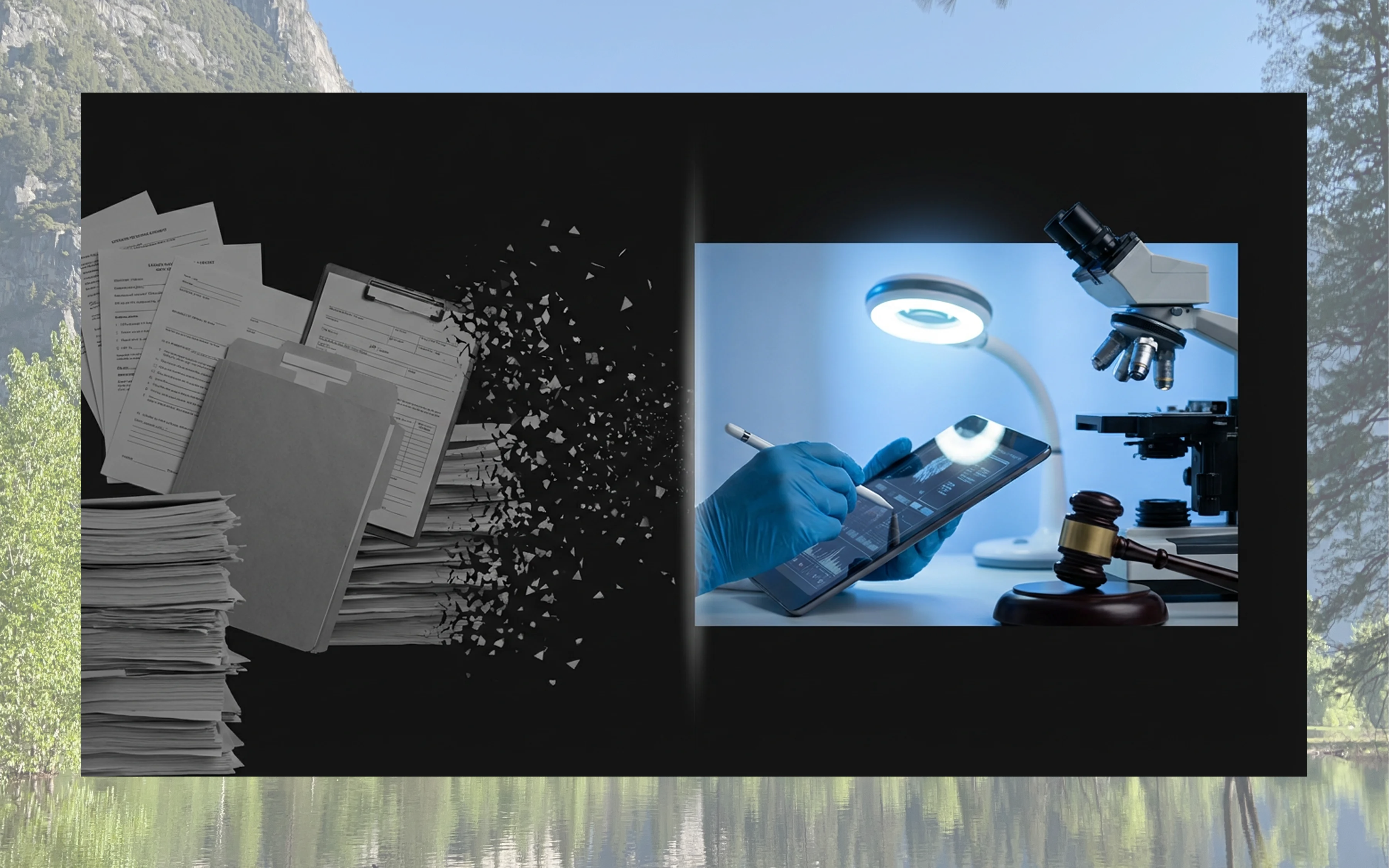
Every few years, a technology arrives that changes how a profession works. For forensics, that moment is now. AI is entering the workflow of forensic pathologists, medicolegal death investigators, coroners, and forensic scientists—and with it comes a question that deserves a clear answer: is this technology here to replace the people who do this work?
It isn't. But it is here to change what they spend their time on.
An inflection point for forensic work
Forensic professionals have always operated under pressure that most industries never experience. Every case carries legal weight. Every report can be subpoenaed. Every conclusion may need to be defended on the stand. And yet, the infrastructure supporting this work has barely changed in decades—paper forms, manual dictation, disconnected systems, and documentation workflows that consume hours that could be spent on actual casework.
AI doesn't change what forensics is. It changes what forensics professionals are forced to spend their time doing. And that distinction matters.
The documentation crisis no one talks about
A forensic pathologist performing a full autopsy may spend 45 minutes to an hour on the examination itself. The documentation that follows—structuring findings, formatting reports, integrating toxicology and scene data, aligning with office templates—can take two to three times as long. For medicolegal death investigators, the ratio is similar: the scene visit is one thing, but the paperwork that follows is where the hours disappear.
This imbalance has consequences. Backlogs grow. Turnaround times stretch from weeks to months. Professionals burn out not from the work they trained for, but from the administrative weight around it. Families wait longer for answers. Cases move slower through the justice system.
This is the problem AI is built to solve—not the forensic judgment, but the friction surrounding it.
What AI actually handles—and what it can't touch
AI is exceptionally good at certain tasks in the forensic workflow:
- Structuring observations into report sections—turning spoken findings into formatted external and internal examination narratives.
- Applying templates consistently—populating your office's specific report format without manual reformatting.
- Synthesizing case data—bringing together scene narratives, medical records, toxicology results, and investigation notes into a single workspace.
- Recognizing forensic terminology—understanding that lividity, petechiae, and perimortem fracture patterns are precise terms, not suggestions to be paraphrased.
But there is a clear boundary. AI cannot do any of the following:
- Read a scene. The ability to walk into a death scene and reconstruct what happened—interpreting position, environment, lividity patterns, and physical evidence in context—is a deeply human skill built through years of training and experience.
- Make the call. Determining cause and manner of death requires clinical judgment, medicolegal reasoning, and professional accountability that no algorithm can replicate. The pathologist signs the report. The pathologist takes the stand.
- Testify in court. A jury doesn't hear from a model. They hear from a person—someone who can explain findings, withstand cross-examination, and convey confidence in their conclusions. Credibility is human.
- Speak to a family. When a mother asks how her child died, the answer doesn't come from a dashboard. It comes from a professional who understands both the science and the weight of the moment.
- Train the next generation. Mentorship, case review, and hands-on teaching cannot be automated. The future of the profession depends on experienced professionals passing their knowledge forward.
"AI isn't replacing forensic professionals—it's creating space for the human skills that justice depends on."
The skills that define the next chapter
When documentation stops consuming the majority of a professional's day, the skills that were always essential become more visible—and more investable. Medicolegal reasoning gets deeper attention when the pathologist isn't exhausted from formatting. Collaboration with law enforcement, prosecutors, and toxicologists improves when there's capacity for coordination. Communication—explaining findings to a detective, presenting in court, delivering results to next of kin—is one of the most valuable and underinvested skills in forensics. AI can't improve how you address a jury, but it can free up the hours you need to prepare.
A force multiplier, not a replacement
Forensics doesn't have a surplus of pathologists and investigators—it has a shortage. The problem isn't too many people doing this work. It's not enough people, doing too much paperwork, on too many cases. AI addresses the paperwork. The pathologist still stands at the table. The investigator still reads the scene. The coroner still makes the determination.
The future of forensics isn't less human. It's more human—because the tools finally exist to let professionals focus on the work that only they can do.
Ready to see what that looks like in practice? Book a Call, see how Dr. Pandey uses it, or email founders@locarda.com.

Ready to transform your documentation?
Join forensics professionals using AI-powered tools to save time and improve accuracy.
See how Dr. Pandey uses LocardaQuestions? Email founders@locarda.com